



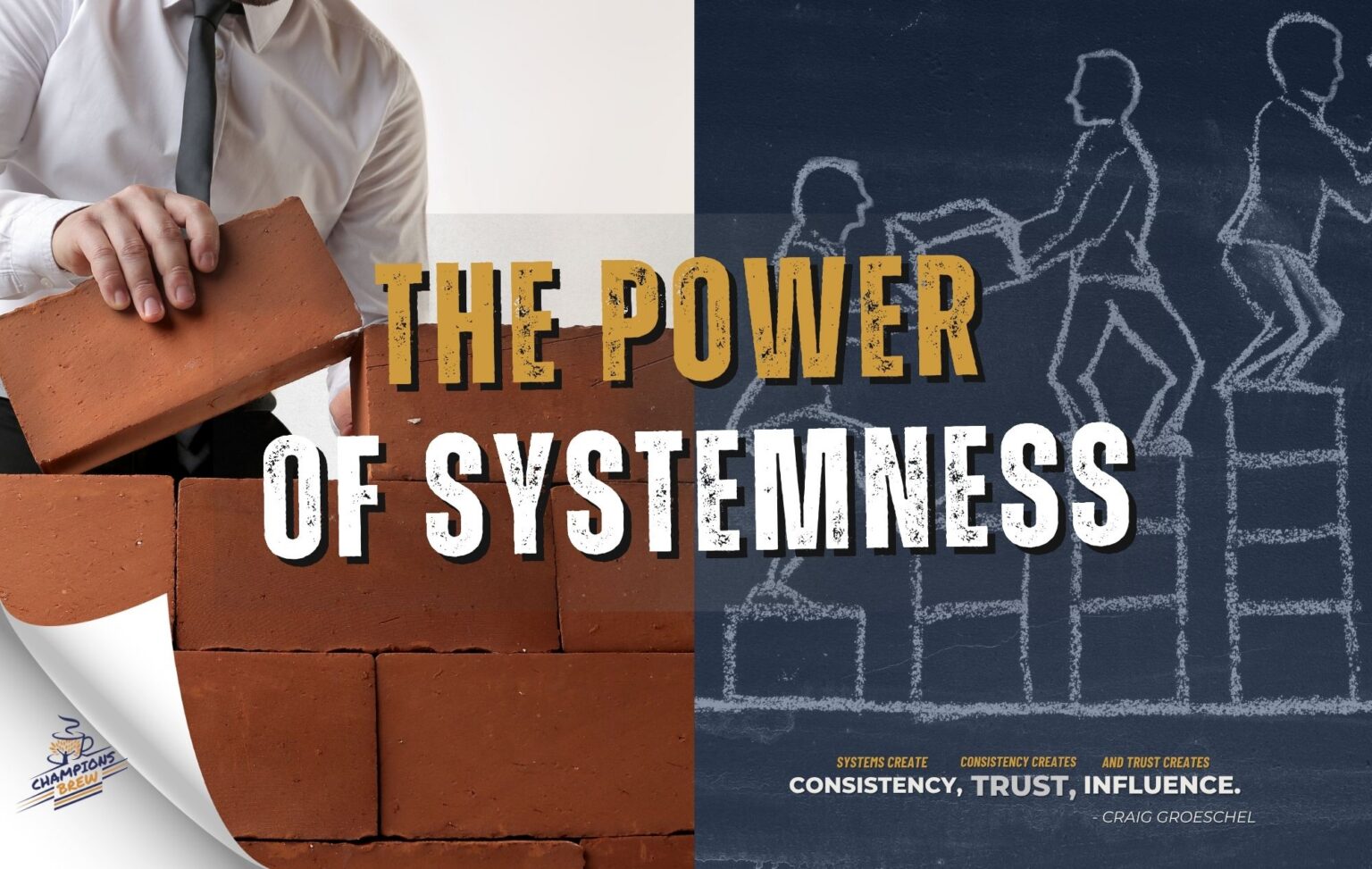
Systems Beat Heroics: The Power of “Systemness” in Work and Life
“Systems build consistency, and consistency builds trust.” — Craig Groeschel
Happy Friday, Brew Nation!
“The system you create for your organization will dictate the behavior of your people.” That powerful quote from Greg Steely hit me right between the eyes this week.
If you’ve spent any time on a coaching call with me, you know that “systemness” is a core concept I bring to the table constantly. When clients identify a persistent barrier in their business or personal life, I encourage them to treat it like a scientific experiment. Form a hypothesis: “If I do something differently, I will reduce, eliminate, or prevent that barrier from occurring.”
Once they run the experiment and get the outcome they want, the real work beginssystem-izing that new behavior. They block time in their calendar to protect it, measure it to confirm it’s actually working, and regularly reflect on what’s going well or what needs tweaking. In essence, it’s the systemization of problem-solving—and it works in every single area of life, not just at work.
I recently listened to an episode of the Maxwell Leadership Executive Podcast featuring Greg Steely titled Systems Beat Heroics. The discussion clearly articulated a trap so many leaders fall into feeling compelled to be the “Hero” who saves the day, rather than building the systems that create true sustainability and scale.
The Barriers to “Systemness”
Why do so many high-performing leaders resist building systems? It usually comes down to three major mental hurdles:
- Language Traps: Viewing challenges strictly as “problems” creates immediate overwhelm and paralysis. It locks teams into a negative cycle where they get stuck in a rut and feel like they can’t act their way out.
- Complexity Bias: There is a common misconception that systems must be rigid, overly complicated, or designed to restrict personal freedom. This keeps leaders from building simple structures at work or at home.
- The “Hero” Mindset: This might be the single worst barrier. Leaders often find subtle validation in being the “answer man” or the firefighter who rescues the team during a crisis. Unconsciously, they avoid systems because being needed feels good!
Strategies to Shift from Heroics to Systems
If you want to stop firefighting and start building sustainable momentum, apply these four operational shifts:
- Reframe Your Vocabulary: Shift your language from “problems” to “opportunities.” This simple vocabulary tweak redirects your team’s energy away from blame and toward collaborative solution-building.
- View Systems as Guardrails: Systems don’t need to be complex manuals gathering dust on a shelf. Think of them as highway guardrails that allow you and your team to move faster with total confidence without flying off the edge.
- Conduct an Operational Audit: Look at what is already working well in your organization or routine. Those smooth processes are likely succeeding because of an existing, often unnoticed, system. Document and replicate it!
- Shift from “I” to “We”: Listen closely to how your team communicates. Actively redirect “I” language (individual heroism) toward “we” and “they” language to cultivate shared responsibility and collective victory.
Quote of the Week
“The system you create for your organization will dictate the behavior of your people.”
— Greg Steely
oky n
Being the Uncommon Leader means trade-off individual glory for long-term organizational health. It is the “huddle room” of operational discipline—the space where you choose scalable processes over personal heroics. Common leaders rely on constant firefighting to prove their value, leaving their teams exhausted and dependent. Uncommon Leaders build simple, repeatable guardrails that empower their people, build trust, and drive sustainable growth.
Email me at coachjohngallagher@gmail.com with the subject line “SYSTEMS” so we can connect on how you can start trading heroics for “systemness” this week!
What You Need to Do:
The “Systemness” Audit
To stop rescuing and start building systems today, execute these three steps:
- Audit One Firefighting Habit: Identify one problem you repeatedly solve yourself for your team or family. Write down a 3-step process so someone else can handle it next time.
- Reframe the Language: Catch yourself or your team using the word “problem” this week, and intentionally replace it with “opportunity for improvement.”
- Block the Calendar: Take one new positive habit you’ve recently proven out and lock a recurring time block into your calendar to ensure it remains a non-negotiable system.
” Growth is the only guarantee that tomorrow will get better, but heroics won’t scale your mission—systems will. Stop saving the day on your own, put the guardrails in place, and build a culture that lasts. Keep climbing.– John Gallagher”
It’s an honor to be your trusted Friday Coffee Guy. Each week, I bring what I’m living, learning, and testing in the trenches of executive coaching and leadership development. If this edition challenged you to drop the hero cape and build better guardrails, SHARE it with an exhausted leader who needs a system reset today, then click SUBSCRIBE. Let’s grow Brew Nation together!
Until next week—stay focused, stay rooted, and finish the race with extreme ownership, Champions!